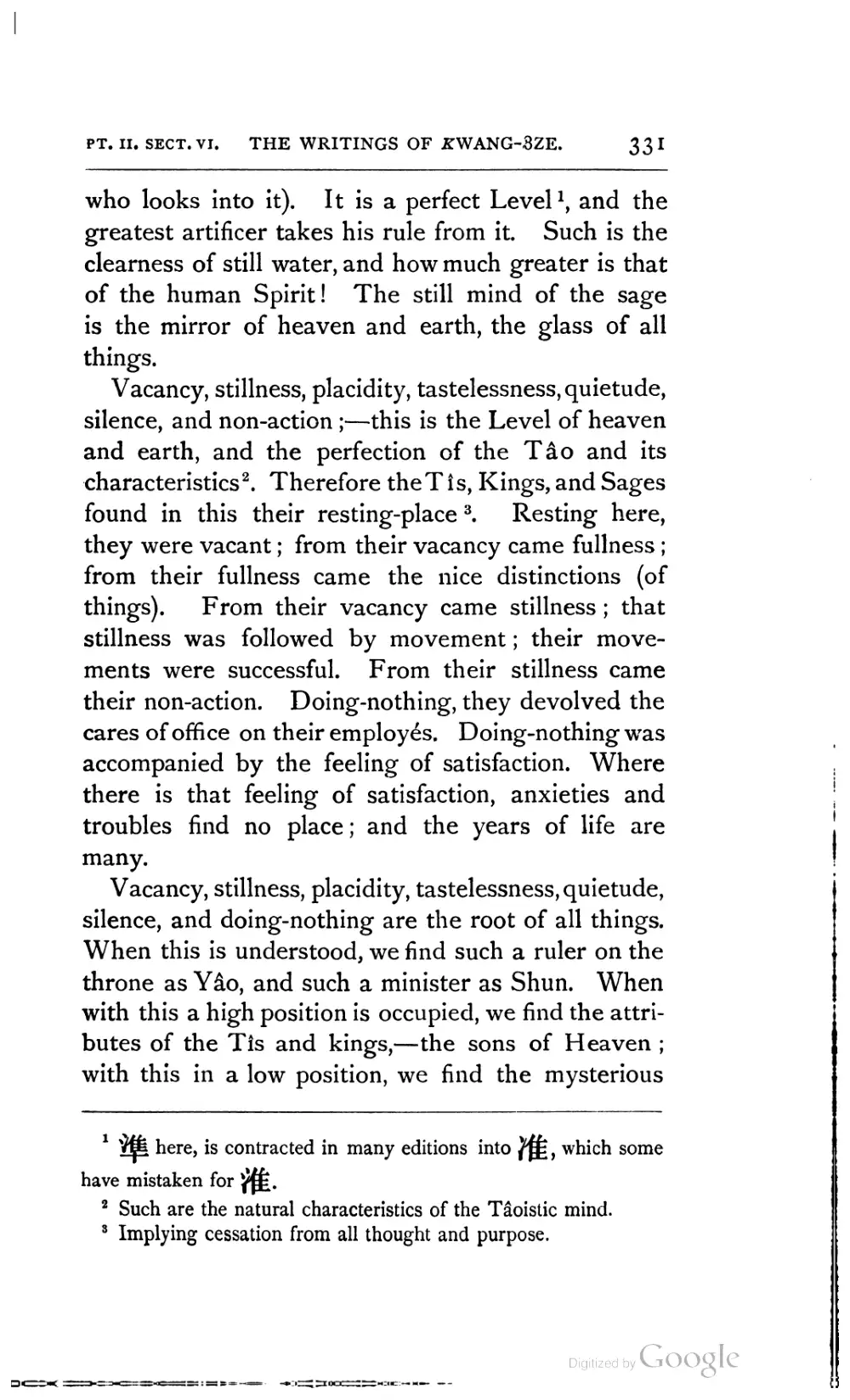
This small textual note protects the paragraph's image. ‘the Level of heaven and earth’ is 準, the water-level, which some editions contract to 准 and some readers have mistaken for 淮, a river's name. The page before made still water ‘a perfect Level’ from which ‘the greatest artificer takes his rule’; the true reading carries that argument from water to mind, and the misreading would cut it off.
The Tâo Teh King — Sacred Books of China Part I, SBE Vol. 39 (trans. James Legge, 1891)
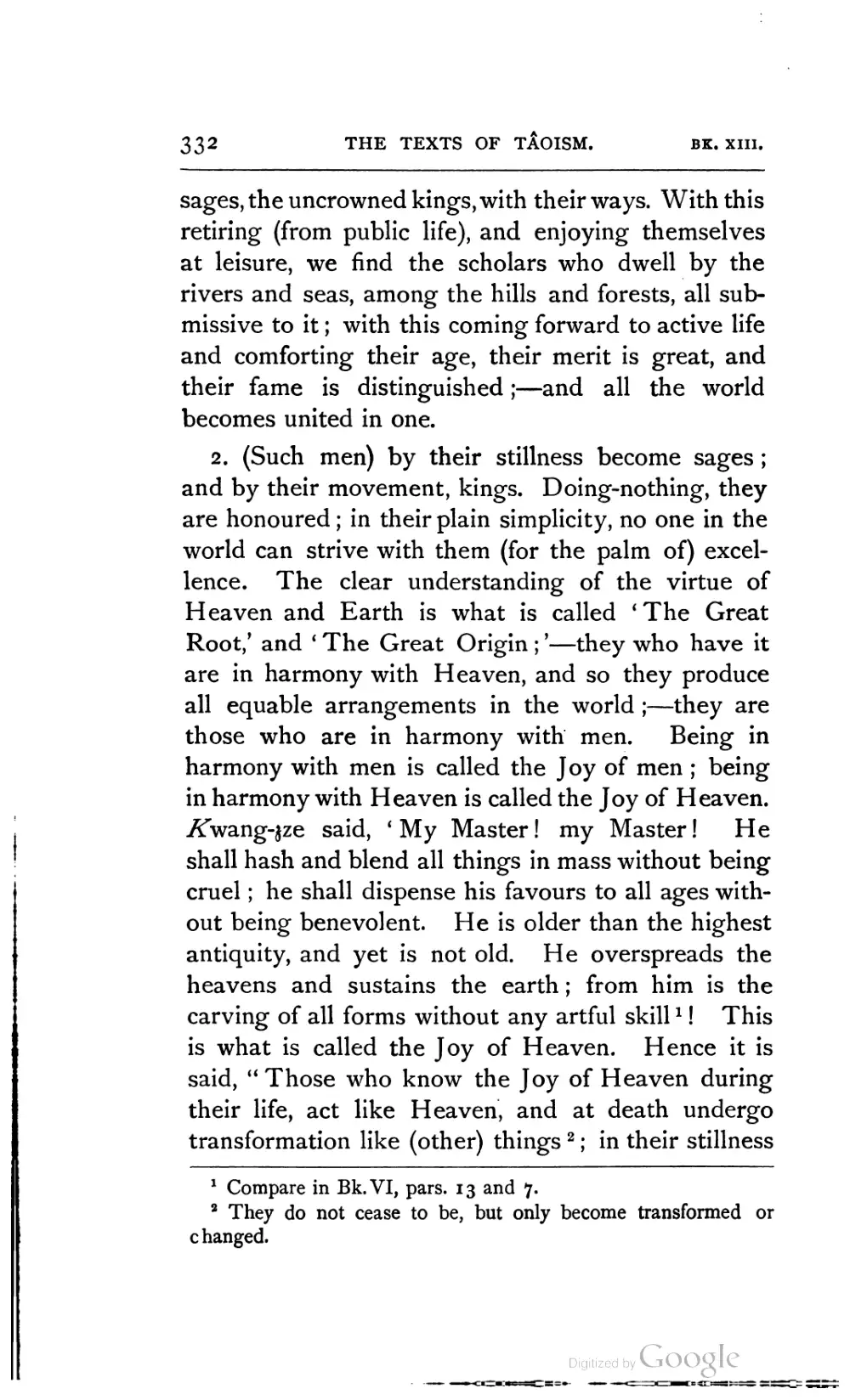
Open to all
page 331
No image is selected for this page; its own page image is shown.
page 331
Vacancy, stillness, placidity, tastelessness, quietude, silence, and non-action;—this is the Level of heaven and earth, and the perfection of the Tao and its characteristics2. Therefore the Tis, Kings, and Sages found their resting-place3 in this. Resting here, they were vacant; from their vacancy came fullness; from their fullness came the fine distinctions (of things). From their vacancy came stillness; that stillness was followed by movement; their movements were successful. From their stillness came their non-action. Doing nothing, they devolved the cares of office on their subordinates. Doing nothing was accompanied by a feeling of satisfaction. Where there is that feeling of satisfaction, anxieties and troubles find no place, and the years of life are many.
Vacancy, stillness, placidity, tastelessness, quietude, silence, and doing-nothing are the root of all things. When this is understood, we find such a ruler on the throne as Yâo, and such a minister as Shun. When a high position is occupied with this, we find the attributes of the Tîs and kings,—the sons of Heaven; with this in a low position, we find the mysterious sages, the uncrowned kings, with their ways. With this, retiring (from public life) and enjoying themselves at leisure, we find the scholars who dwell by the rivers and seas, among the hills and forests, all submissive to it; with this, coming forward to active life and comforting their age, their merit is great and their fame distinguished;—and all the world becomes united in one.
1 準 [Press: level; a standard] here is contracted in many editions into 准 [Press: the contracted form of 準], which some have mistaken for 淮 [Press: the river Huai].
2 Such are the natural characteristics of the Taoist mind.
* It implies a cessation of all thought and purpose.