The Satapatha-Brâhmana, Part IV — SBE Vol. 43 — trans. Julius Eggeling (1897)

The translator’s English as printed (Julius Eggeling). The original-language text is not held; names are romanised as the translator printed them.
p. 43
THE SATAPATHA-BRÂHMANA
ACCORDING TO THE TEXT OF THE MÂDHYANDINA SCHOOL
Translated by
Julius Eggeling
Part IV
Books VIII, IX AND X
Oxford: the Clarendon Press
[1897]
Scanned at sacred-texts.com, September 2006. Proofed and formatted by John Bruno Hare. This text is in the public domain in the United States because it was published prior to January 1st, 1923. These files may be used for any non-commercial purpose, provided this notice of attribution is left intact in all copies.
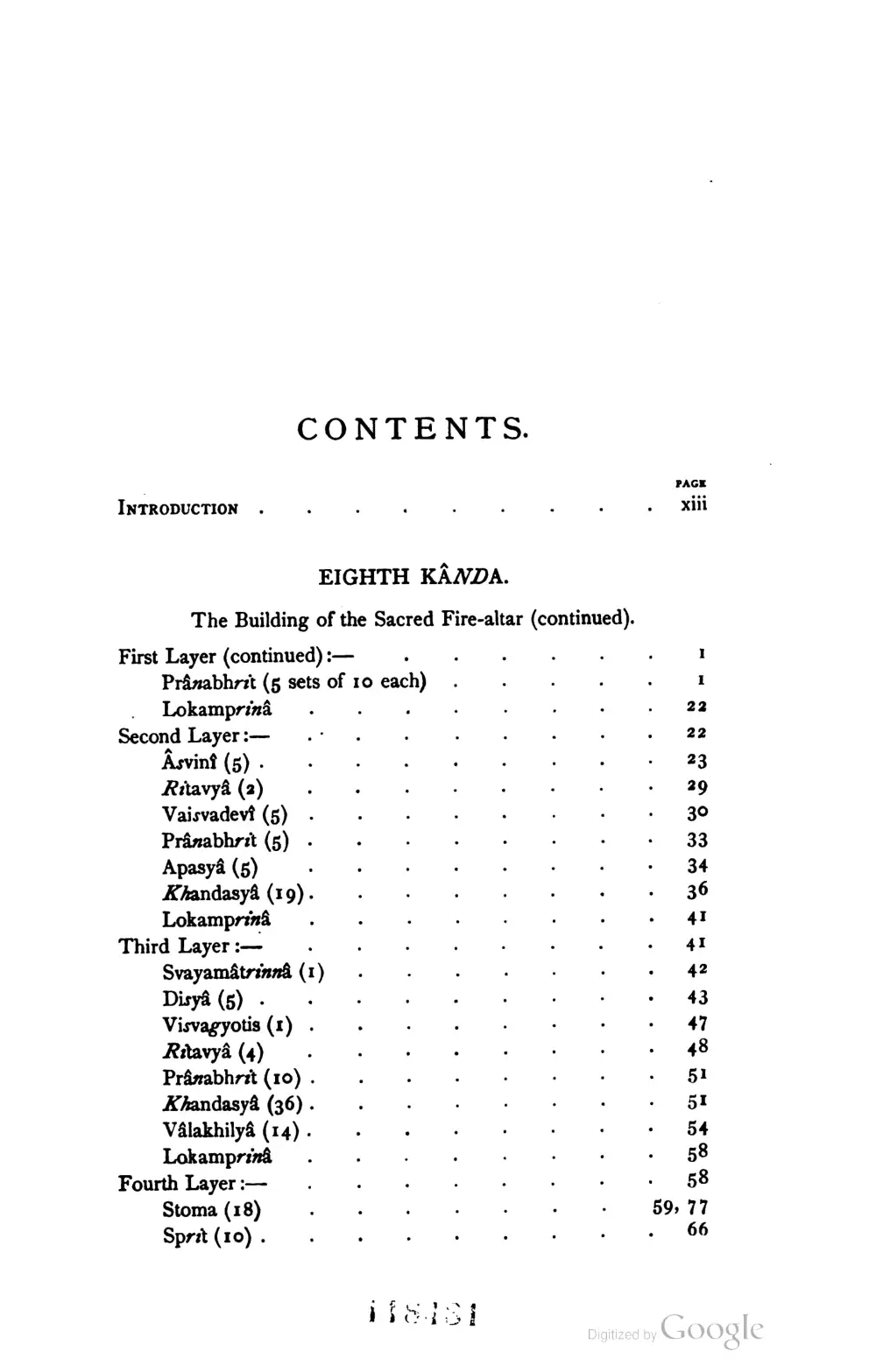
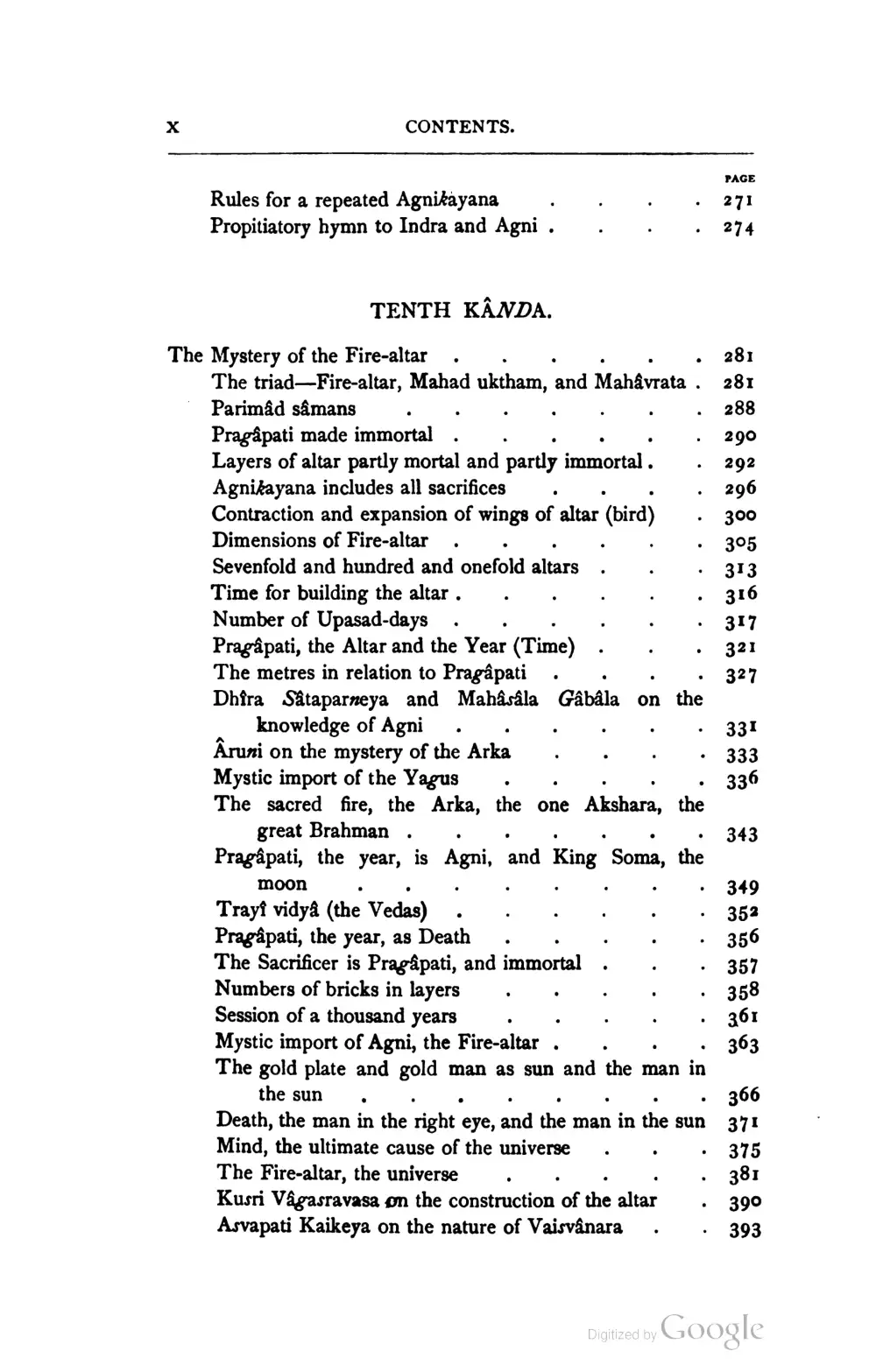
CONTENTS.
PAGE
INTRODUCTION
xiii
EIGHTH KÂNDA.
The Building of the Sacred Fire-altar (continued).
First Layer (continued):--
p. 1
Prânabhrit (5 sets of 10 each)
p. 1
Lokamprinâ
p. 22
Second Layer:--
p. 22
Âsvinî (5)
p. 23
Ritavyâ (2)
p. 29
Vaisvadevî (5)
p. 30
Prânabhrit (5)
p. 33
Apasyâ (5)
p. 34
Khandasyâ (19)
p. 36
Lokamprinâ
p. 41
Third Layer:--
p. 41
Svayamâtrinnâ (1)
p. 42
Disyâ (5)
p. 43
Visvagyotis (1)
p. 47
Ritavyâ (4)
p. 48
Prânabhrit (10)
p. 51
Khandasyâ (36)
p. 51
Vâlakhilyâ (14)
p. 54
Lokamprinâ
p. 58
Fourth Layer:--
p. 58
Stoma (18)
59, 77
Sprit (10)
p. 66
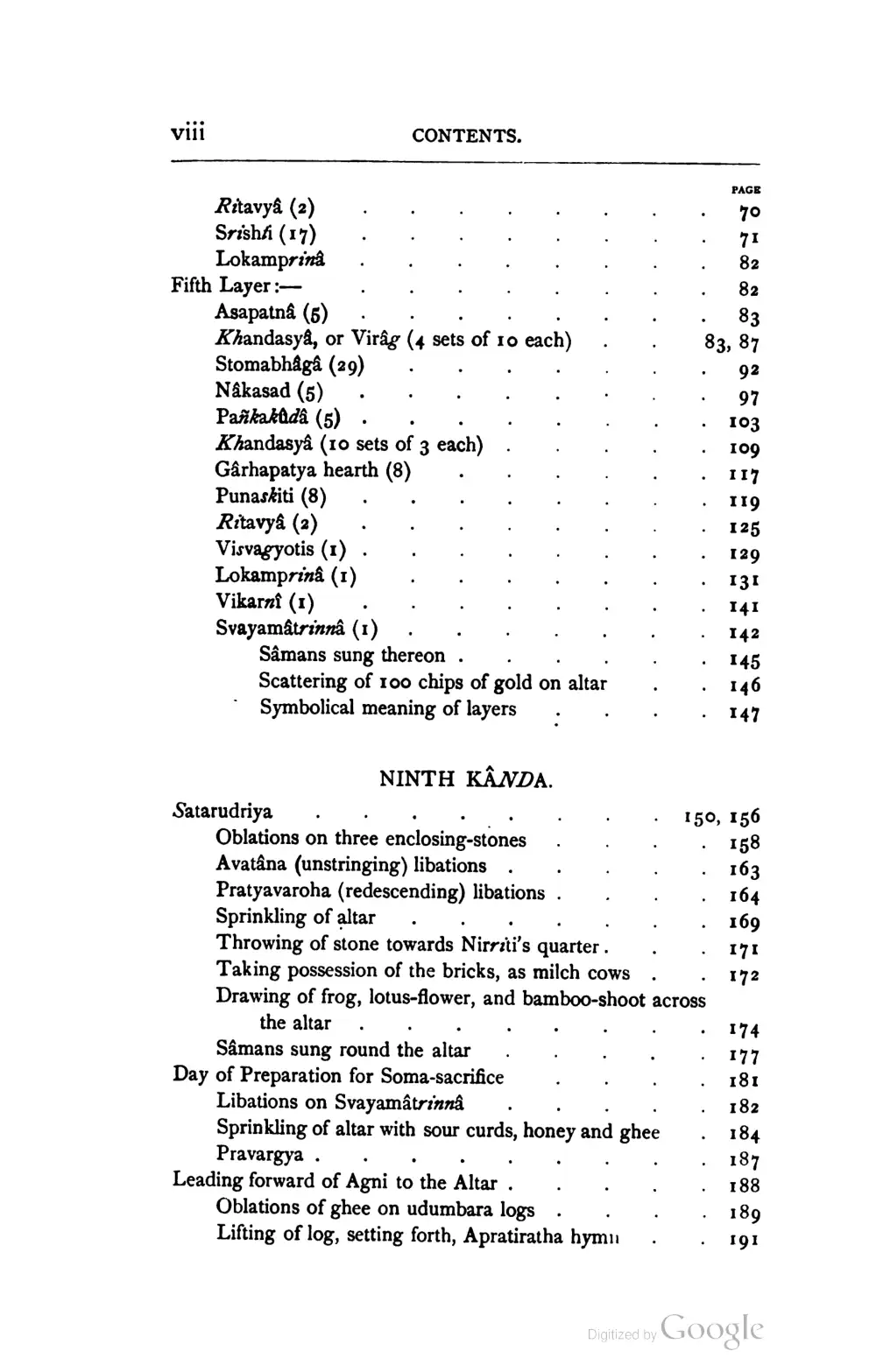
PAGE
Ritavyâ (2)
p. 70
Srishti (27)
p. 71
Lokamprinâ
p. 82
Fifth Layer:--
p. 82
Asapatnâ (5)
p. 83
Khandasyâ, or Virâg (4 sets of 20 each)
83, 87
Stomabhâgâ (29)
p. 92
Nâkasad (5)
p. 97
Pañkakûdâ (5)
p. 103
Khandasyâ (10 sets of 3 each)
p. 109
Gârhapatya hearth (8)
p. 117
Punaskiti (8)
p. 119
Ritavyâ (2)
p. 125
Visvagyotis (1)
p. 129
Lokamprinâ (1)132
Vikarnî (1)
p. 141
Svayamâtrinnâ (1)
p. 142
Sâmans sung thereon
p. 145
Scattering of 100 chips of gold on altar
p. 146
Symbolical meaning of layers
p. 147
NINTH KÂNDA.
Satarudriya
150, 156
Oblations on three enclosing-stones
p. 158
Avatâna (unstringing) libations
p. 163
Pratyavaroha (redescending) libations
p. 264
Sprinkling of altar
p. 169
Throwing of stone towards Nirriti's quarter
p. 171
Taking possession of the bricks, as milch cows
p. 172
Drawing of frog, lotus-flower, and bamboo-shoot across the altar
p. 174
Sâmans sung round the altar
p. 177
Day of Preparation for Soma-sacrifice
p. 181
Libations on Svayamâtrinnâ
p. 182
Sprinkling of altar with sour curds, honey and ghee
p. 184
Pravargya
p. 187
Leading forward of Agni to the Altar
p. 188
Oblations of ghee on udumbara logs
p. 189
Lifting of log, setting forth, Apratiratha hymn
p. 191
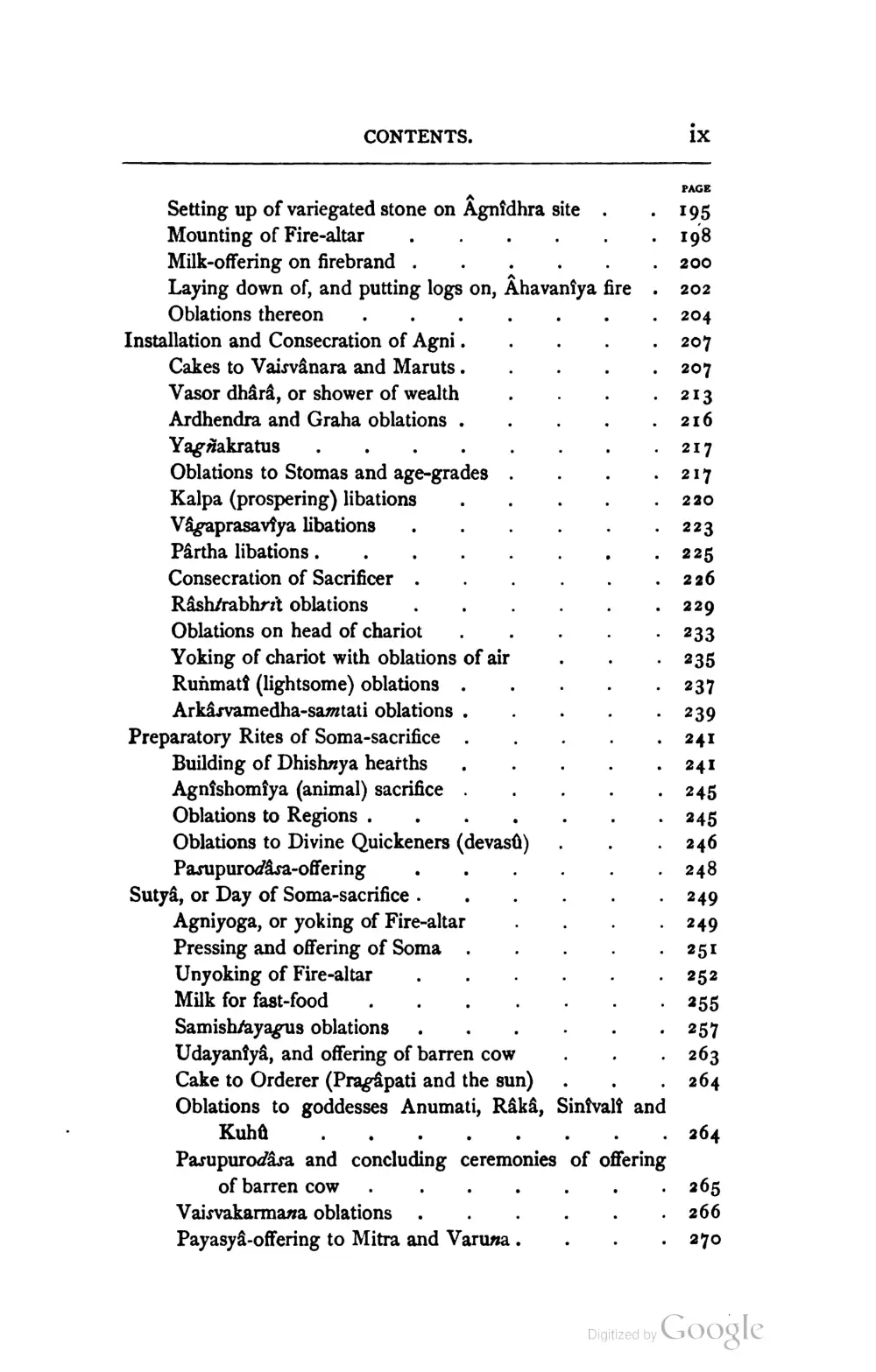
PAGE
Setting up of variegated stone on Âgnîdhra site
p. 195
Mounting of Fire-altar
p. 198
Milk-offering on firebrand
p. 200
Laying down of, and putting logs on, Âhavanîya fire
p. 202
Oblations thereon
p. 204
Installation and Consecration of Agni
p. 207
Cakes to Vaisvânara and Maruts
p. 207
Vasor dhârâ, or shower of wealth
p. 213
Ardhendra and Graha oblations
p. 216
Yagñakratus
p. 217
Oblations to Stomas and age-grades
p. 217
Kalpa (prospering) libations
p. 220
Vâgaprasavîya libations
p. 223
Pârtha libations
p. 225
Consecration of Sacrificer
p. 226
Râshtrabhrit oblations
p. 229
Oblations on head of chariot
p. 233
Yoking of chariot with oblations of air
p. 235
Ruṅmatî (lightsome) oblations
p. 237
Arkâsvamedha-samtati oblations
p. 239
Preparatory Rites of Soma-sacrifice
p. 242
Building of Dhishnya hearths
p. 241
Agnîshomîya (animal) sacrifice
p. 245
Oblations to Regions
p. 245
Oblations to Divine Quickeners (devasû)
p. 246
Pasupurodâsa-offering
p. 248
Sutyâ, or Day of Soma-sacrifice
p. 249
Agniyoga, or yoking of Fire-altar
p. 249
Pressing and offering of Soma
p. 251
Unyoking of Fire-altar
p. 252
Milk for fast-food
p. 255
Samishtayagus oblations
p. 257
Udayanîyâ, and offering of barren cow
p. 263
Cake to Orderer (Pragâpati and the sun)
p. 264
Oblations to goddesses Anumati, Râkâ, Sinîvalî and Kuhû
p. 264
Pasupurodâsa and concluding ceremonies of offering of barren cow
p. 265
Vaisvakarmana oblations
p. 266
Payasyâ-offering to Mitra and Varuna
p. 270
PAGE
Rules for a repeated Agnikayana
p. 271
Propitiatory hymn to Indra and Agni
p. 274
TENTH KÂNDA.
The Mystery of the Fire-altar
p. 281
The triad--Fire-altar, Mahad uktham, and Mahâvrata
p. 281
Parimâd sâmans
p. 288
Pragâpati made immortal
p. 290
Layers of altar partly mortal and partly immortal
p. 292
Agnikayana includes all sacrifices
p. 296
Contraction and expansion of wings of altar (bird)
p. 300
Dimensions of Fire-altar
p. 305
Sevenfold and hundred and onefold altars
p. 313
Time for building the altar
p. 316
Number of Upasad-days
p. 317
Pragâpati, the Altar and the Year (Time)
p. 321
The metres in relation to Pragâpati
p. 327
Dhîra Sâtaparneya and Mahâsâla Gâbâla on the knowledge of Agni
p. 331
Âruni on the mystery of the Arka
p. 333
Mystic import of the Yagus
p. 336
The sacred fire, the Arka, the one Akshara, the great Brahman
p. 343
Pragâpati, the year, is Agni, and King Soma, the moon
p. 349
Trayî vidyâ (the Vedas)
p. 352
Pragâpati, the year, as Death
p. 356
The Sacrificer is Pragâpati, and immortal
p. 357
Numbers of bricks in layers
p. 358
Session of a thousand years
p. 361
Mystic import of Agni, the Fire-altar
p. 363
The gold plate and gold man as sun and the man in the sun
p. 366
Death, the man in the right eye, and the man in the sun
p. 371
Mind, the ultimate cause of the universe
p. 375
The Fire-altar, the universe
p. 381
Kusri Vâgasravasa on the construction of the altar
p. 390
Asvapati Kaikeya on the nature of Vaisvânara
p. 393
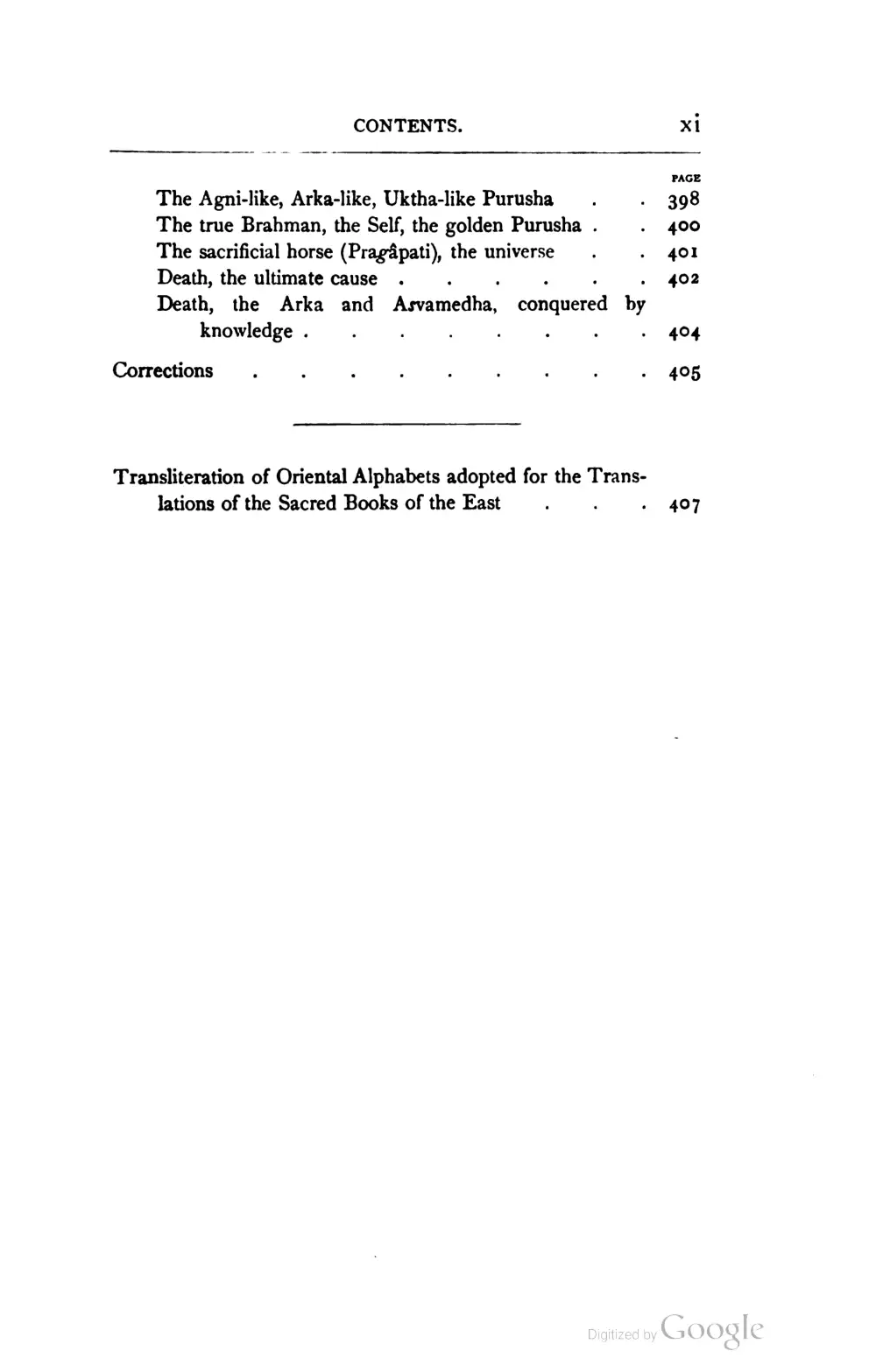
PAGE
The Agni-like, Arka-like, Uktha-like Purusha
p. 398
The true Brahman, the Self, the golden Purusha
p. 400
The sacrificial horse (Pragâpati), the universe
p. 401
Death, the ultimate cause
p. 402
No commentary for this page.