About The One Yantra
What It Is
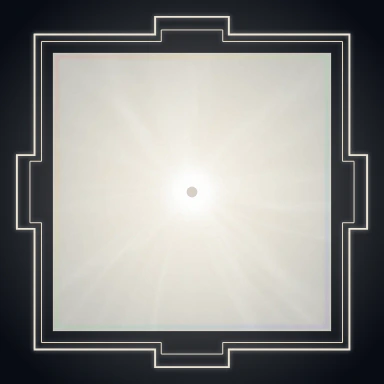
The One Yantra is the Capstone of the Twelve Steps: one figure, and one guided sitting of twelve and a half minutes. The sitting begins on the figure, narrows to its centre point, lets the point go, and rests for six minutes in an even white field. It opens at Scholar once all Twelve Steps are complete. Its cautions come first, on its own page.
The Sitting, Stage by Stage
The Opening, fifteen seconds. A gold light grows from a point. A gong and a sung OM, at 136.1 Hz, rise with it and give way to the tones.
Arrive, one minute. The figure appears and the tones come in.
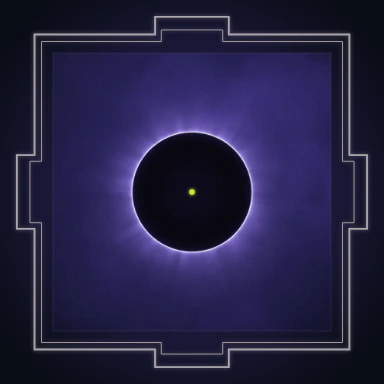
Hold, one minute. The figure gives way to its centre point on white.
Fade, two minutes. The point dissolves into the white.
The Field, six minutes. White, with a gentle flicker at 7 Hz. The forms of the Twelve Steps rise in turn, 1 to 12, for fifteen seconds each, each with a trace of its stone's hue and its own tones. Between them, the forms the eye is known to make for itself are drawn faintly behind the white, and only the beat sounds.
Return, two minutes. The flicker stops, the tones fade and the figure comes back.
The Close, fifteen seconds. The gold light returns and fades. The gong and the OM ring out into silence.
Colour, Form, Sound, Flicker, Motion
Colour. One even field of warm white, the Clear Light of Step 10. While a step's form shows, the white leans very slightly toward that step's stone.
Form. One point at the centre, which dissolves. After it, forms so faint that they sit at the edge of seeing.
Sound. The gong and the sung OM open the sitting and give way to Step 12's tones, all nine, over the constant 7 Hz beat. In the Field the tones follow the forms: each step's own tones while its form shows, and the beat alone between them. As each step arrives the gong swells softly. At the Close the gong and the OM ring out. The beat is not played: each ear is given one tone, 7 Hz apart, which is why the sitting asks for headphones.
Flicker. The whole field, at the same 7 Hz as the beat, so that eye and ear keep one rhythm. It runs only in the Field. It is never above 12 Hz, never flashes red, and at its gentle setting stays below the WCAG flash threshold.
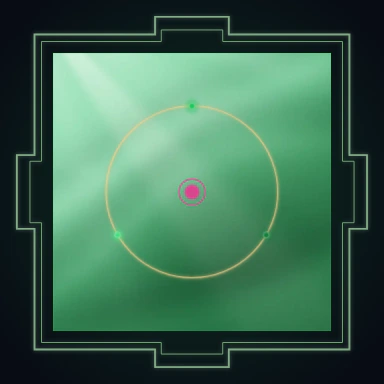
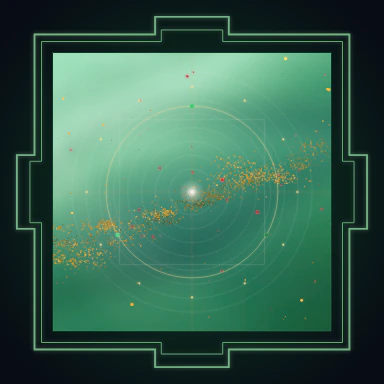
Motion. Slow and soft, never a flash. The figure's light breathes. The green field at its centre drifts, with blue moving in it and flecks of gold and ruby light. The figure itself holds still.
What Is Established and What Is Not
Established: the eye's part. A held gaze stills the image. A still image fades. An even field can blank out. The eye then supplies light and geometry of its own, and a held colour leaves its opposite as an afterimage.
Contested: the beat. Whether a 7 Hz beat brings the brain's rhythm into step with it is unsettled.
Untested: the state. That the sitting brings the state a step names has not been tested by any study. The order of the colours and the states they are given are the tradition's own teaching.
No part of the sitting promises a state.
The Figure, in Three Compositions
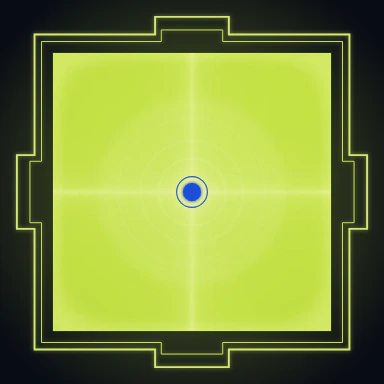
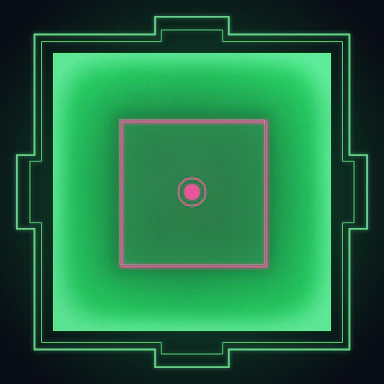
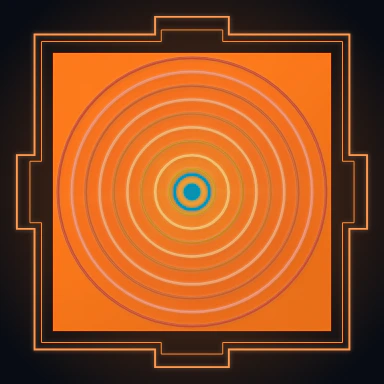
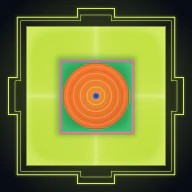
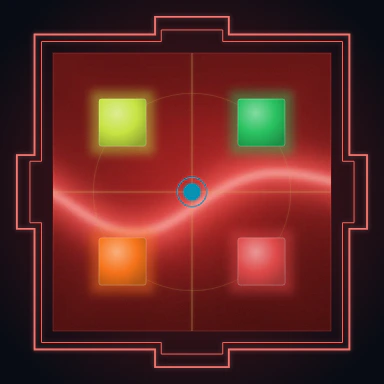
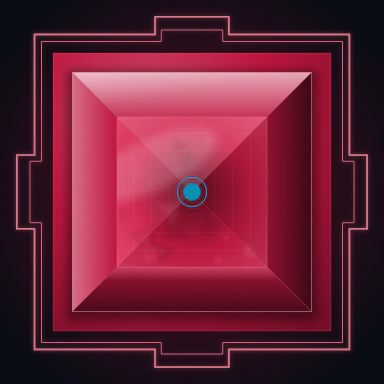
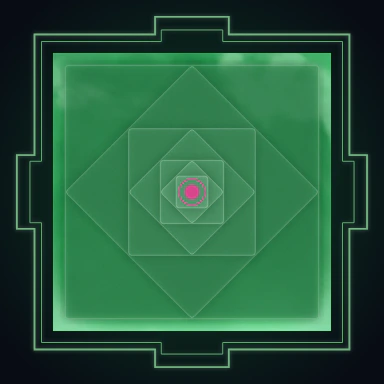
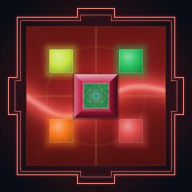
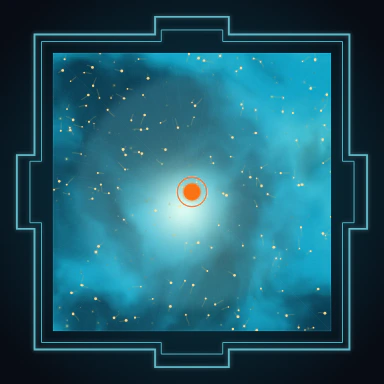
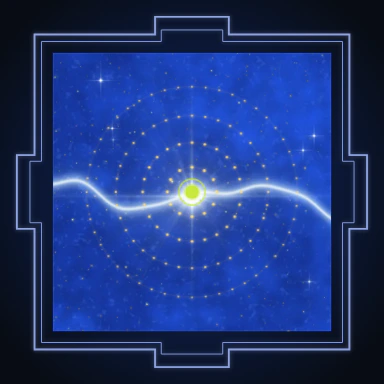
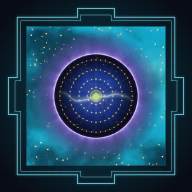
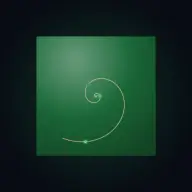
The sitting opens on one of three figures, chosen at random each time. Each sets all twelve forms on one centre, inside the same plain square with four gates, with Step 12's field at the centre and a white point in it. No spiral crosses any of them: Step 11 is a golden circle in its own green.
Twelve Petals. Twelve equal petals in step order round the centre, one triad to each quarter, so that each of the four gates faces one triad. Each petal is its step's plate: the stone's light with the form in it.
Four Enclosures. Four enclosures, one inside the next, one to each triad: a square for Steps 1 to 3, an eight-petalled lotus for Steps 4 to 6, a twelve-fold ring of light for Steps 7 to 9, and the centre for Steps 10 to 12, which ends in the white point.
Accretion. Eleven bands laid one round the next from the point outward: Step 1 nearest the centre, Step 11 outermost, and Step 12 the field the point sits in.
How It Was Made
The geometry is original, generated in code from the Press's research set and the canon's pigments, by classical yantra construction and nineteenth-century colour science. Nothing is traced or copied.
The One Yantra →