Legge supplies the words "(of your father and ruler)" in the text, then tells us in a note that they mean not the king but "the Tâo, whose will was to be found in his nature." He adds a phrase and then reinterprets his own addition. The page before has just made the minister's duty to his ruler concrete and inescapable, so a plain political reading fits better: the duke's charge is the king's, and the counsel is to be ready to die in it.
The Tâo Teh King — Sacred Books of China Part I, SBE Vol. 39 (trans. James Legge, 1891)
Open to all
page 214
No image is selected for this page; its own page image is shown.
page 214
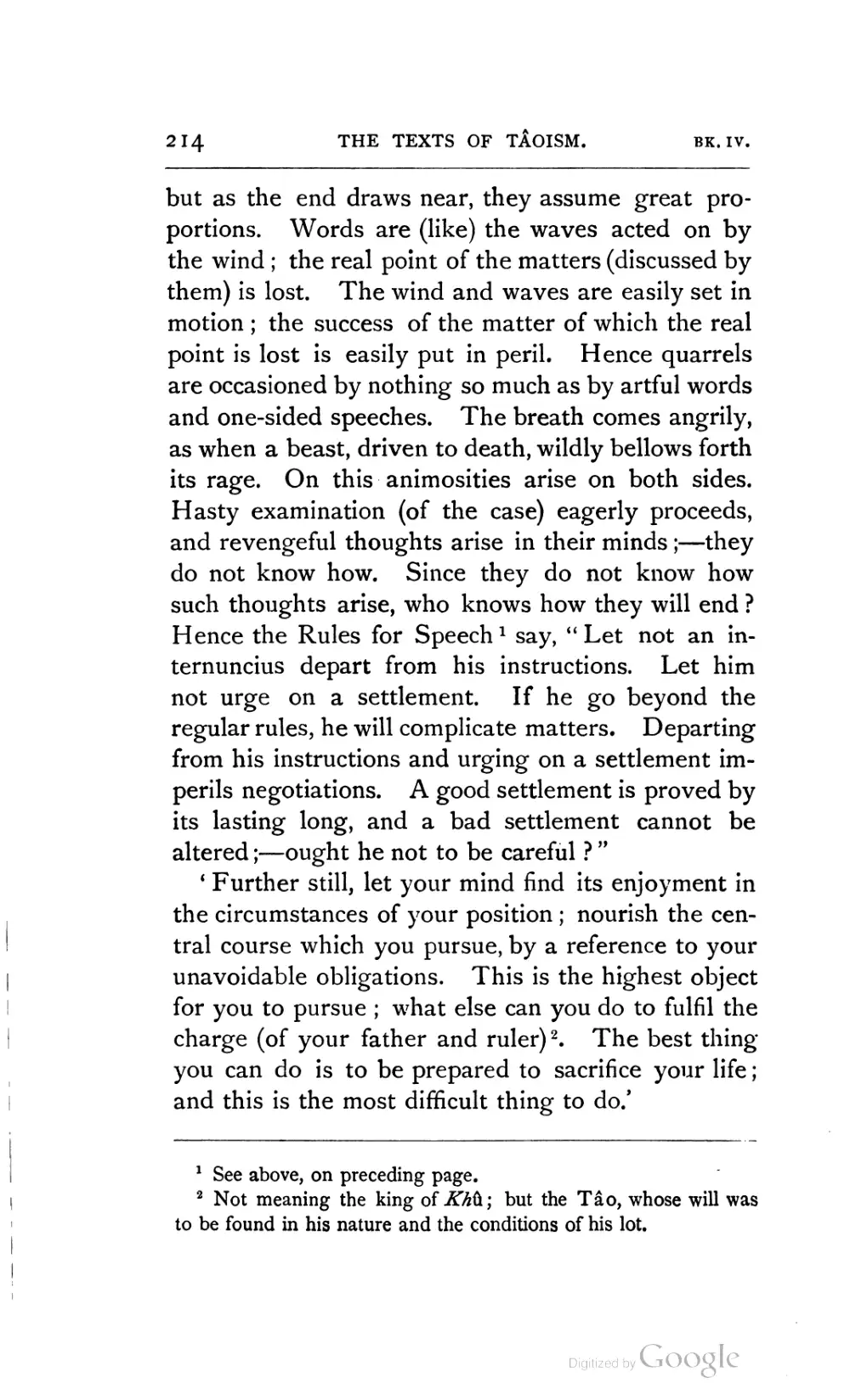
‘Further still, let your mind find its enjoyment in the circumstances of your position; nourish the central course that you pursue by reference to your unavoidable obligations. This is the highest object for you to pursue; what else can you do to fulfil the charge (of your father and ruler)²? The best thing you can do is to be prepared to sacrifice your life; and this is the most difficult thing to do.’
1 See above, on the preceding page.
2 Not meaning the king of Khû, but the Tâo, whose will was to be found in his nature and the conditions of his lot.