The title “The True Book of Nan-hwa” is imperial, conferred in A.D. 742 when Kwang-ȝze's birthplace was renamed, more than a thousand years after he lived. It parallels Legge's account of the emperor King ordering that Lâo-ȝze's treatise be called a King. Both books owe their canonical names to acts of state, which is one reason their later history belongs to court religion as much as to philosophy.
The Tâo Teh King — Sacred Books of China Part I, SBE Vol. 39 (trans. James Legge, 1891)
Open to all
page 11
No image is selected for this page; its own page image is shown.
page 11
Division of the
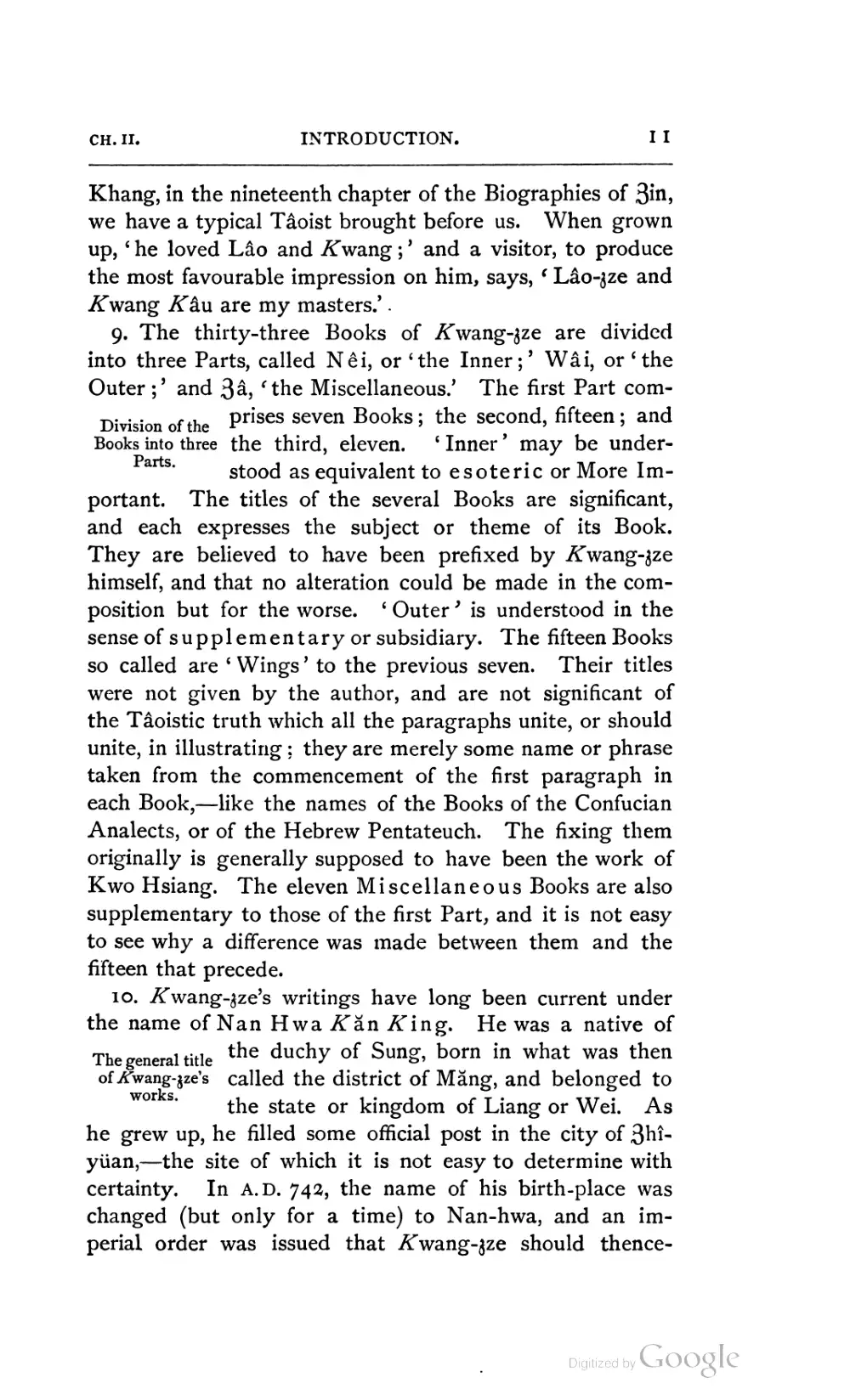
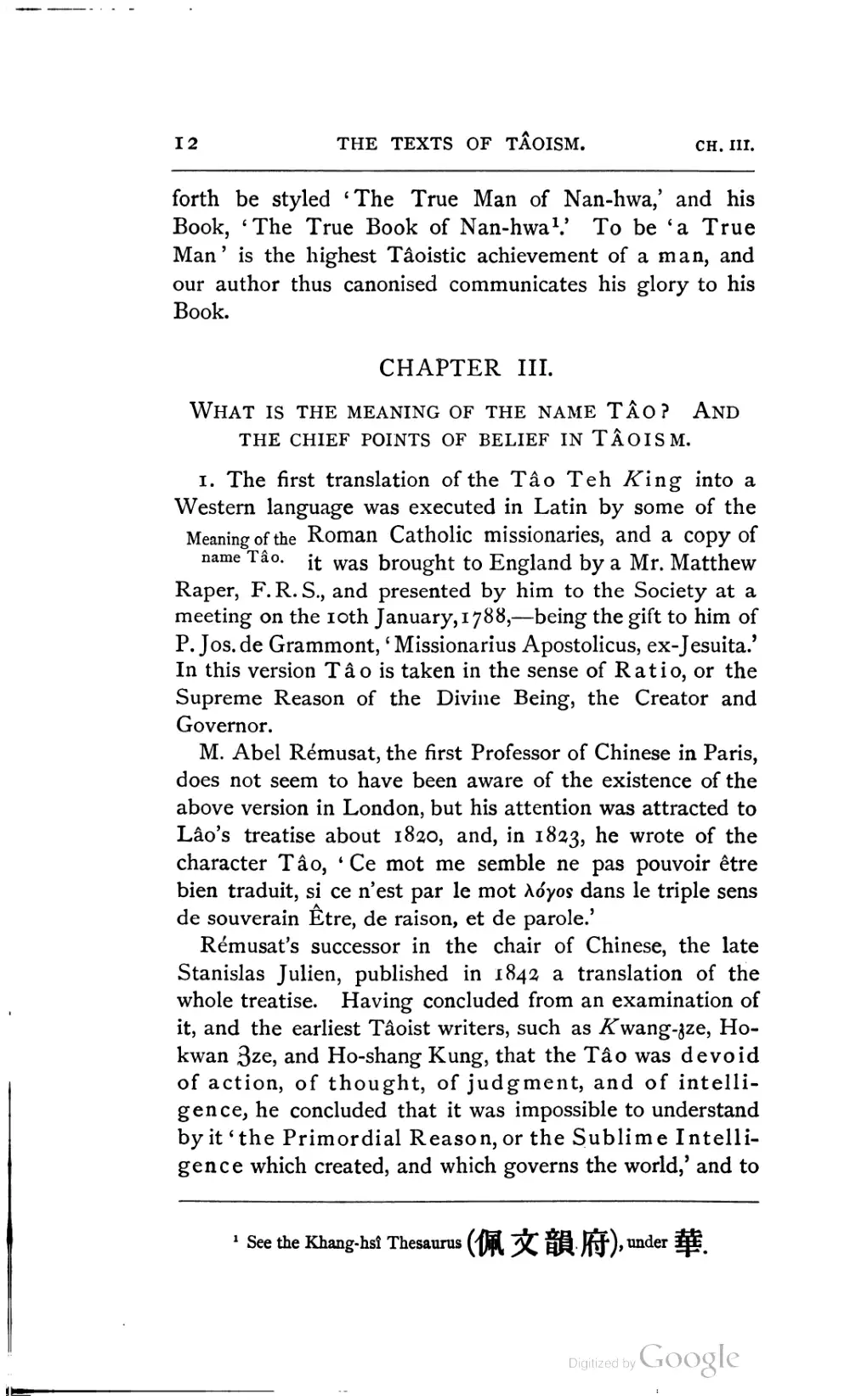
10. Kwang-ȝze’s writings have long been current under the name of Nan Hwa Kăn King. He was a native of the duchy of Sung, born in what was then called the district of Mang, and belonged to the state or kingdom of Liang or Wei. As he grew up, he filled some official post in the city of Ȝhî-yüan, the site of which is not easy to determine with certainty. In A.D. 742 the name of his birthplace was changed (but only for a time) to Nan-hwa, and an imperial order was issued that Kwang-ȝze should from then on be styled ‘The True Man of Nan-hwa’, and his Book ‘The True Book of Nan-hwa1’. To be ‘a True Man’ is the highest Taoistic achievement of a man, and our author, thus canonised, passes his glory on to his Book.