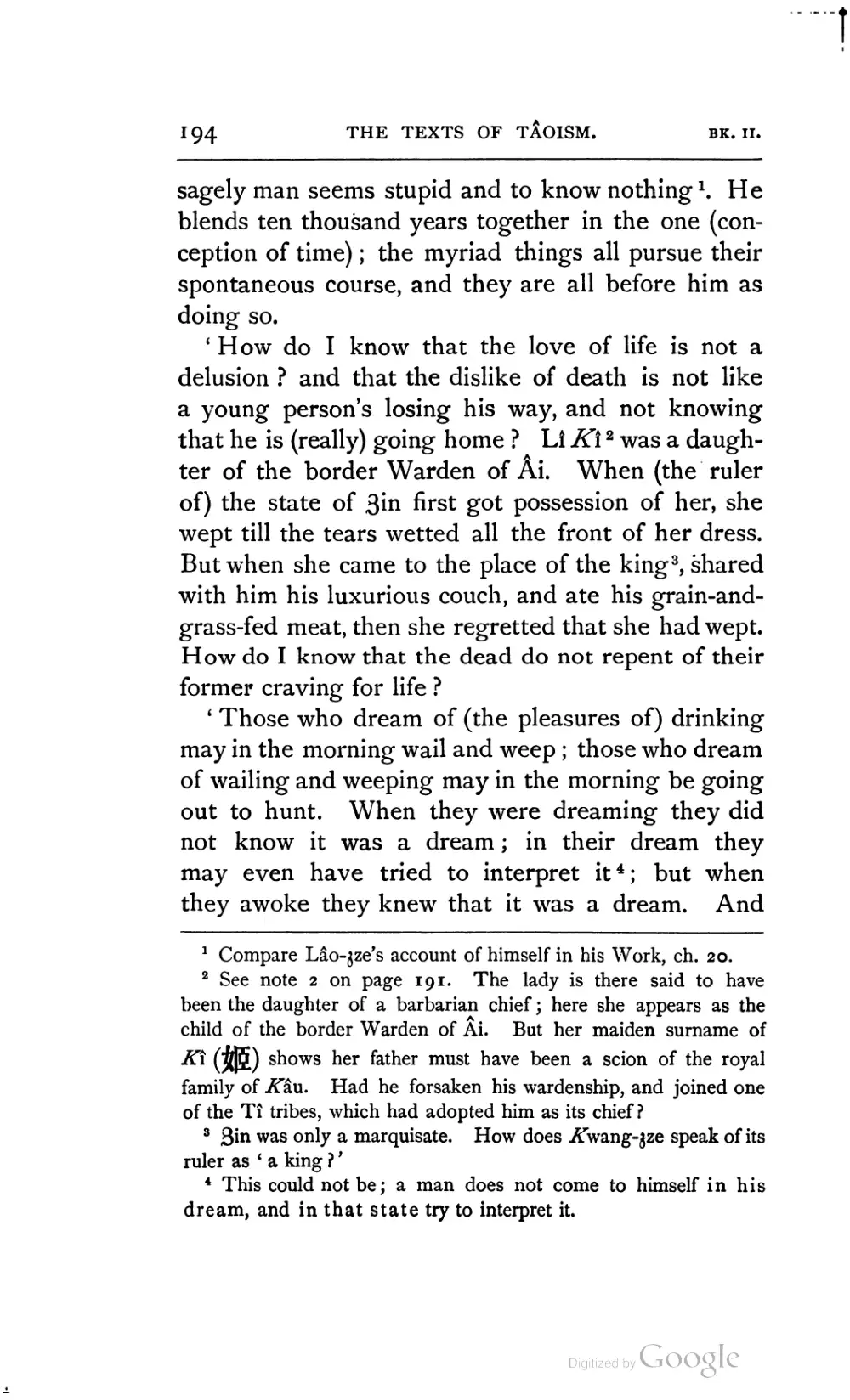
Legge's parenthesis “(Such language only means that the sagely man)” turns the cosmic hyperbole, standing by the sun and moon and holding all space and time, into a statement about keeping silent. The words are supplied, but what follows supports them: the sage “seems stupid and to know nothing,” which Legge's note compares with Lâo-ȝze's account of himself in chapter 20 of his book.
The Tâo Teh King — Sacred Books of China Part I, SBE Vol. 39 (trans. James Legge, 1891)
Open to all
page 193
No image is selected for this page; its own page image is shown.
page 193
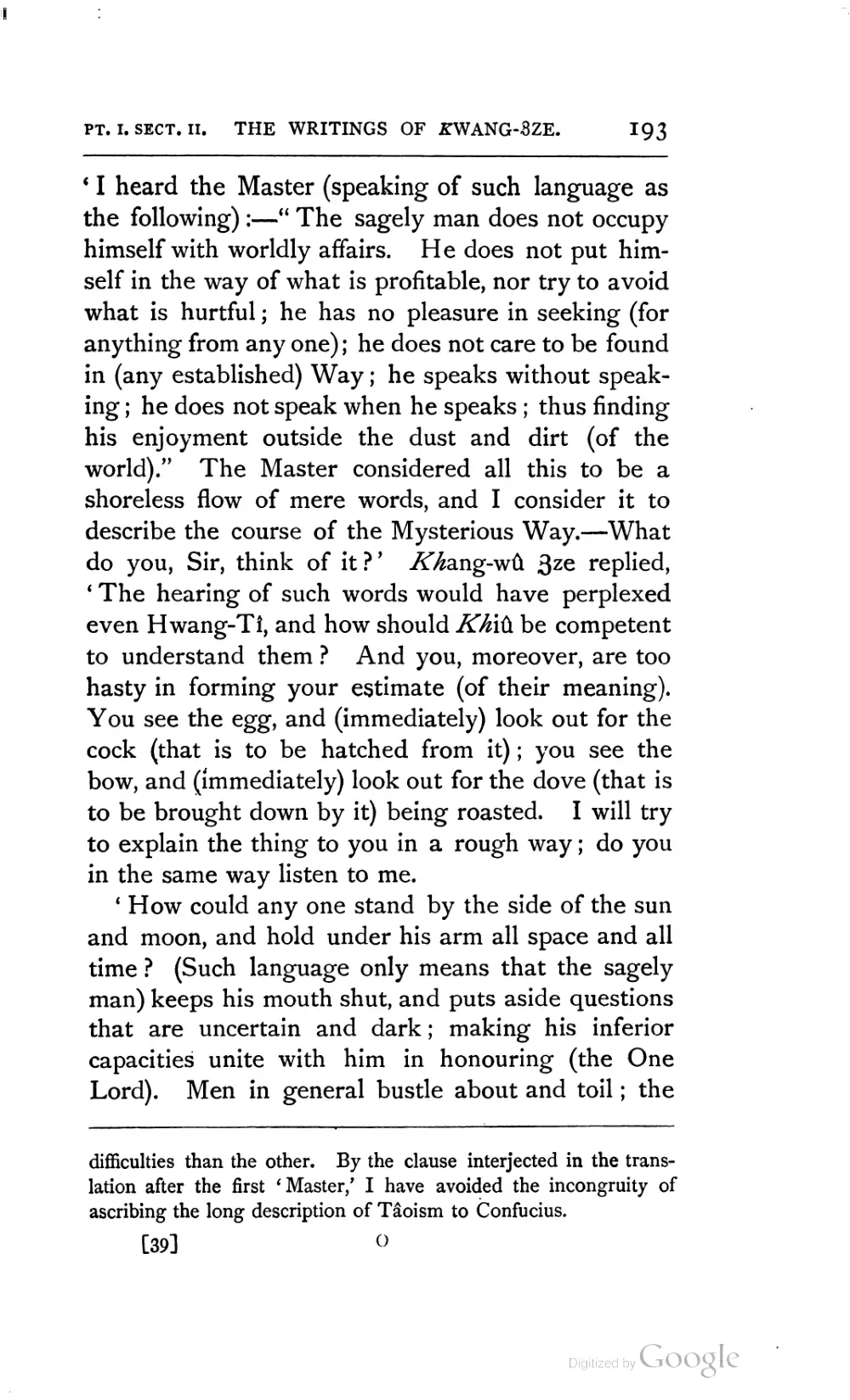
‘How could anyone stand by the side of the sun and moon, and hold all space and all time under his arm? (Such language only means that the sagely man) keeps his mouth shut, and puts aside questions that are uncertain and dark; making his inferior capacities unite with him in honouring (the One Lord). Men in general bustle about and toil; the sagely man seems stupid and to know nothing1. He blends ten thousand years together in the one (conception of time); the myriad things all pursue their spontaneous course, and they are all before him as doing so.